Planning a wedding in New York City and trying to decide between plated dinner and buffet service. Your venue coordinator has an opinion. Your caterer has a different opinion. Your mother has a third opinion. You’re stuck making a choice that affects your budget, timeline, and how the whole reception flows.
Neither option is universally better. It depends on your venue, guest count, budget, and what kind of atmosphere you want.
Alfonso Catering has done hundreds of weddings across NYC venues. We’ve seen both plated and buffet service work beautifully. We’ve also seen both fail miserably when matched incorrectly with the venue or wedding style.
Here’s what actually matters when choosing between plated and buffet for your NYC wedding.
Pated vs Buffet Wedding Services In NYC
Space Is the First Problem
NYC venues are notoriously tight on space. Ballrooms that hold 150 people for a seated dinner have maybe 1,200 square feet total. Try fitting a buffet line in there, and suddenly you’ve lost seating for 20 guests.
Plated Service Needs Less Room
Plated dinner requires tables, chairs, and aisles for servers to move through. That’s it. No buffet tables, no serving stations, no chafing dishes taking up floor space.
Small NYC venues almost always work better with plated service. You maximize seating capacity without guests bumping into buffet lines every time they get up.
Venues with awkward layouts, narrow rooms, or lots of pillars also favor plated. Buffet lines need clear flow patterns. Cramped spaces with obstacles make buffet service a nightmare.
Buffet Needs Serious Square Footage
Buffet service needs a dedicated space for food stations. Not just the buffet tables themselves, but space on both sides for guests to queue and serve themselves.
Figure roughly 100-150 square feet per buffet station. A double-sided buffet where guests can access from both sides helps, but you still need the footprint.
Larger NYC venues with separate cocktail and dining spaces can handle a buffet better. Set up stations in a different area, guests flow through during designated service time, less congestion in the main dining room.
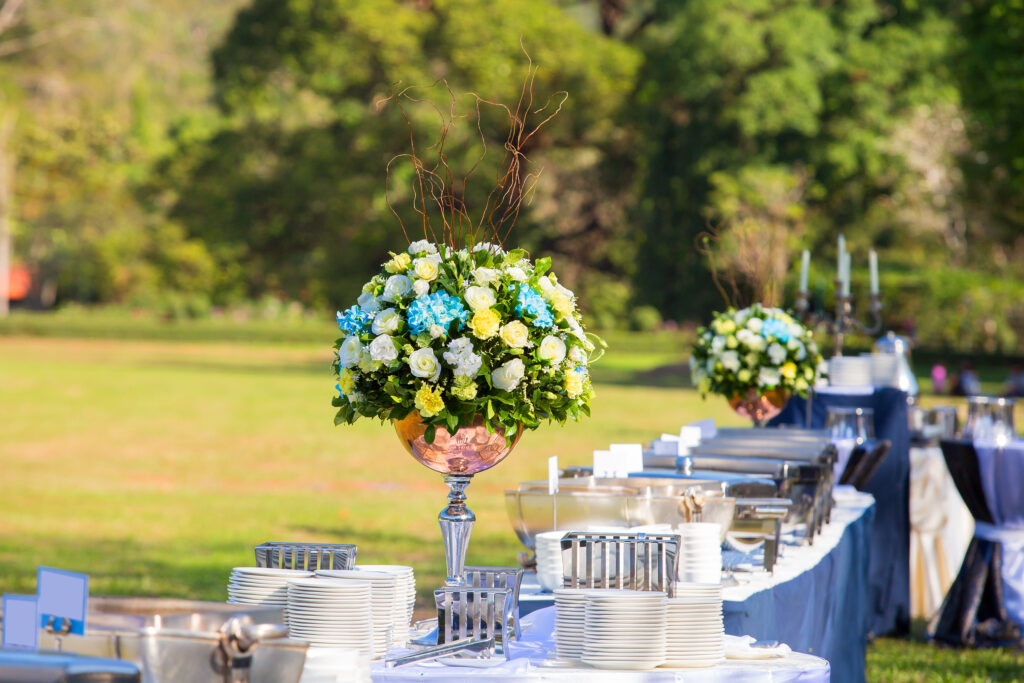
Outdoor venues or spaces with terraces have natural separation that works for a buffet. Indoor-only venues with single rooms struggle.
Guest Count Changes the Math
Small weddings and massive weddings both favor plated service. It’s the mid-sized weddings where buffet sometimes makes sense.
Under 75 Guests
Plated service almost always works better for intimate weddings. Buffet for 50 people looks empty and awkward. You’re paying for a full buffet setup and staffing for minimal return.
Plated dinner feels more elegant at smaller counts. Guests get hot food delivered directly to their table. No waiting in line. More time actually enjoying the reception.
Alfonso Catering recommends plated for anything under 75 guests at NYC venues. Better guest experience, cleaner execution.
75 to 150 Guests
This range is where buffet becomes viable if your venue has space. Cost savings can be significant compared to plated.
Buffet flow works reasonably well with this count. Not so many people that the lines are endless, not so few that the buffet feels empty.
But it still depends heavily on venue layout. 100 guests in a cramped Midtown venue? Stick with plated. 100 guests in a spacious Brooklyn loft? Buffet could work great.
Over 150 Guests
Large weddings need serious planning for the buffet to work. One buffet line for 200 people means guests wait 30-45 minutes to eat. Unacceptable.
Multiple buffet stations help, but require even more space. Two or three identical setups are positioned throughout the venue. Guests are assigned to specific stations to prevent everyone from mobbing the closest one.
At this scale, plated service is often simpler to execute well. Alfonso Catering can serve 200 plated dinners faster than 200 guests can get through even well-designed buffet lines.
Timeline and Flow
The wedding reception timeline is tight. Cocktail hour, entrances, first dance, toasts, dinner, cake cutting, dancing. Dinner service affects everything after it.
Plated Service Is Predictable
Plated dinner service takes 45-60 minutes from first course to clearing dessert plates. Consistent timeline you can plan around.
Catering staff controls the pace. First course goes out once everyone’s seated. The main course follows after an appropriate interval. Timing stays on track.
Works better for weddings with lots of programming. Speeches during dinner, performances, anything requiring people seated and attentive.
Buffet Service Drags
Even well-run buffet service takes 60-90 minutes for all guests to get food and eat. You can’t rush it. People take their time at buffet lines.
Kills momentum. Dancing stops while everyone eats. Toasts get delayed. Cake cutting pushed back. Suddenly, you’re running an hour behind schedule.
Some couples don’t care about the timeline. They want a relaxed reception where people can eat whenever. A buffet works fine for that vibe.
But if you’ve got specific timing for band performances, surprise elements, or venue curfew concerns, plated keeps things moving.
Food Quality and Presentation
How food looks and tastes differs between service styles. Neither is inherently better, just different.
Plated Looks Refined
Plated dinner lets Alfonso Catering present food exactly how it should look. Composed plates with proper portioning, garnish, and presentation.
Food goes from the kitchen to the table in minutes. Served hot, exactly as designed. No sitting under heat lamps or in chafing dishes.
Multiple course options work better plated. Passed appetizers during cocktail hour, starter salad, choice of entrees, and dessert. Feels like a fine dining experience.
Buffet Shows Abundance
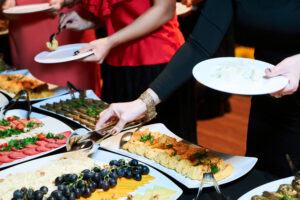
Buffet has a visual impact. Long tables full of food signal abundance and variety. Some couples love that look.
Guests see everything available and choose what they actually want. Picky eaters can skip things. People with big appetites can load their plates.
But food quality suffers under buffet service. Even the best catering can’t keep food at the perfect temperature for 90 minutes in chafing dishes. Things dry out, get overcooked from sitting on the heat, and lose the quality they had fresh from the kitchen.
Cost Differences in NYC
Cost isn’t always the deciding factor, but it matters.
Plated Costs More Per Person
Plated service requires more staff. Servers for each course, runners from the kitchen, bussers clearing plates. Labor costs are higher.
Per-person pricing for plated dinner at NYC venues typically runs $30-$60 more than the equivalent buffet, depending on menu complexity and service level.
For 150 guests, that’s a $4,500-$9,000 difference. Real money that could go elsewhere in the wedding budget.
Buffet Saves on Labor
Buffet needs fewer servers. Set up the stations, keep them stocked, and clear dirty plates. Less hands-on service is required.
Lower labor costs mean lower per-person pricing. Savings scale with guest count.
But don’t choose a buffet only for cost savings. If your venue doesn’t work for a buffet, the money saved isn’t worth the poor guest experience.
What Guests Actually Prefer
Guests generally prefer plated service. They sit down, food comes to them, they eat, and continue enjoying the reception.
Buffet means getting up, waiting in line, carrying plates back to their table, then repeating the process if they want seconds. Older guests, guests in formal attire, and guests with mobility issues all find the buffet more difficult.
Some guests love the buffet because they control portions and choices. But when asked, most wedding guests would choose plated.
NYC Venue Restrictions
Some NYC venues restrict buffet service entirely. Fire codes, health department regulations, or venue policies prohibit it.
Always check with the venue before deciding. Alfonso Catering knows which NYC venues allow buffet and which don’t, but ultimately venue contract determines what’s permitted.
Certain landmark buildings, museums, and historic spaces have strict rules. Plated is often the only option.
Making the Decision
Think about these questions:
Does your venue have space for buffet stations and guest flow? If no, plated is your answer.
Do you have over 150 guests? Multiple buffet stations get complicated. Plated might be simpler.
Is the timeline important to your reception? Plated keeps things moving.
Is the budget tight? Buffet saves money if the venue allows it.
Do you want a formal, elegant atmosphere? Plated fits that better.
Want a casual, relaxed vibe? Buffet can work if space permits.
Alfonso Catering helps couples navigate this decision for NYC venues regularly. We assess your specific venue, guest count, budget, and priorities to recommend what actually makes sense.
Neither plated nor buffet is wrong. But one is usually clearly better for your specific NYC wedding. Let’s figure out which one fits your situation and execute it flawlessly.
Contact Alfonso Catering to discuss wedding service options for your NYC venue and get real guidance based on our experience with your specific location.